

Why Construction Dust Keeps Coming Back After Cleaning
There is a particular frustration that comes with cleaning a property after construction work. The floors have been vacuumed, the surfaces wiped down, the windows look better and, for a moment, everything appears ready.
Then someone walks through the building, opens a door or switches on the ventilation. A little while later, there is dust on the floor again. A dark line has appeared along the edge of a windowsill. The surface that looked clean an hour ago has lost that freshly finished appearance.
It can feel as though the cleaning has made very little difference. In reality, the problem is often that the dust was never confined to the surfaces that had been cleaned.
Construction dust has a habit of travelling
A building site produces dust in all sorts of ways. Cutting, drilling, sanding, plastering, filling and working with timber or masonry all release fine particles into the surrounding space.
Some of this material is easy to see. A layer of dust on a floor or a pile of debris in a corner is hardly difficult to identify. The finer material is another matter. It can remain suspended in the air, settle on top of door frames, gather inside window tracks or find its way into spaces that are not particularly obvious.
And construction rarely happens in one room at a time.
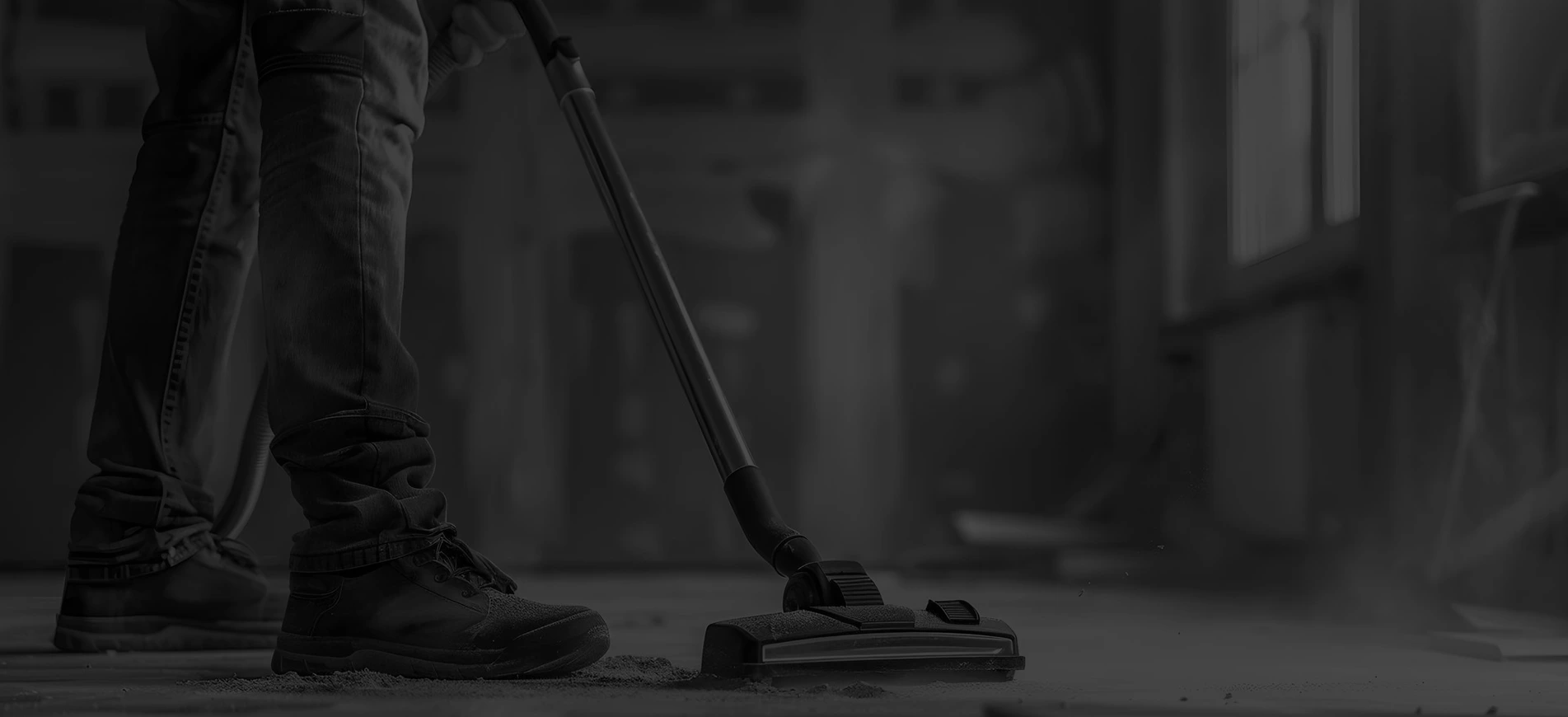
A tradesperson may finish work upstairs while another is still cutting materials downstairs. Someone carries equipment through a recently cleaned corridor. A door is opened and closed repeatedly. Dust moves around with the activity of the building.
This is one reason a property can look clean in one area while another still needs attention. The source of the dust may be somewhere else entirely.
The first clean is not always the last clean
Timing matters more than people sometimes realise.
Imagine a development where plastering, electrical work, flooring and joinery are all being completed in stages. The cleaning team comes in and prepares an area. A contractor then returns to adjust a fitting, drill a hole or finish a small section of work.
The dust is back.
It does not necessarily mean the original cleaning was poor. The building has simply continued to generate dirt after that work was completed.
This is particularly relevant on larger developments, where different houses, apartments or sections of a commercial property may be at different stages of completion. Cleaning too early can mean doing the same work twice.
A more sensible approach is to coordinate cleaning around the construction programme. Areas should be prepared when the trades have finished with them, with enough time allowed for a final inspection and any remaining touch-ups.
That sounds straightforward, but on a busy site it takes communication between the people responsible for the work.
Look above eye level
One of the easiest ways to understand why dust keeps appearing is to look at places that are rarely touched during an ordinary clean.
The tops of door frames are a good example. So are window heads, light fittings, ledges, exposed pipes and the upper edges of built-in units.
These surfaces can collect a surprising amount of fine material. They are also easy to miss when attention is concentrated on floors, worktops and other obvious areas.
The problem becomes apparent later. Someone wipes a windowsill, but dust falls from the frame above it. A floor is vacuumed, but particles drop from a ledge when a door is opened. The same area appears to need cleaning again, even though the real source was never addressed.
A useful way to approach this is to work from higher surfaces downwards. Deal with the areas above first, then move towards lower surfaces and floors. Otherwise, the same work may have to be repeated.
Window tracks, corners and the places dust settles
Not all construction dust is sitting in plain sight.
Window tracks, hinges, frame edges and narrow gaps can collect fine debris. So can skirting boards, the edges of staircases, cupboard interiors and the junctions between different surfaces.
These details become particularly noticeable when a property is empty. Without furniture, curtains and everyday belongings, there is very little to distract from a dusty corner or a dirty window frame.
Glass is another area where the difference between a quick clean and a thorough clean becomes obvious. Dust, stickers, adhesive residue and marks left during installation can all affect the finished appearance. Cleaning the glass alone does not necessarily deal with the surrounding frames and tracks.
This is why a final inspection should not be limited to walking through the middle of each room. The edges and details deserve attention too.
Ventilation can complicate matters
There is another possible source of recurring dust: the building’s ventilation system.
Construction dust can accumulate around air grilles and other openings. If the ventilation system has been exposed to dust during the works, it may need to be checked and dealt with appropriately before normal operation.
It is important not to assume that ordinary surface cleaning will resolve contamination inside ductwork or mechanical equipment. Those systems may require specialist inspection and cleaning.
The same applies to areas that cannot be accessed safely or effectively using standard cleaning equipment. Recognising where one type of cleaning ends and another specialist service is needed is part of doing the job properly.

Why rushing the final clean rarely helps
There is often pressure to get a property ready quickly. A developer has a handover date, a contractor is working towards completion, or the first occupants are due to move in.
Under that pressure, it is tempting to treat cleaning as the last item on a checklist. Get someone in, clean the visible areas and move on.
But a building that has not finished generating dust is not really ready for its final clean.
The more practical approach is to consider the cleaning requirements while the work is still being planned. Which areas will be completed first? Are there several phases of handover? Will contractors still need access after an area has been cleaned? Are communal spaces being used as routes for moving materials?
These questions can make a considerable difference to the amount of repeated work involved.
For larger residential and commercial developments, this planning becomes even more important. Cleaning several apartments or multiple buildings is not simply a matter of repeating the same task. Access, sequencing and coordination all affect how efficiently the work can be completed.
Getting a property ready for handover
A property can be almost finished and still have a considerable amount of work left before it is ready to be presented.
The difference is often in the details: dust on upper surfaces, residue around fittings, dirty window tracks, marks on floors and the less visible areas that have been overlooked during construction.
At Pinnacle Portfolio, we understand that cleaning after construction requires more than a quick pass over the obvious surfaces. The work needs to reflect the condition of the building, the materials involved and the stage the project has reached.
Our post-builder cleaning service supports contractors, developers and property owners preparing buildings for their next stage. Whether the project involves an individual property or a larger development, the objective is to leave the space properly prepared for inspection, presentation or occupation.
You can find out more about our work and the services we provide on the Pinnacle Portfolio website.