
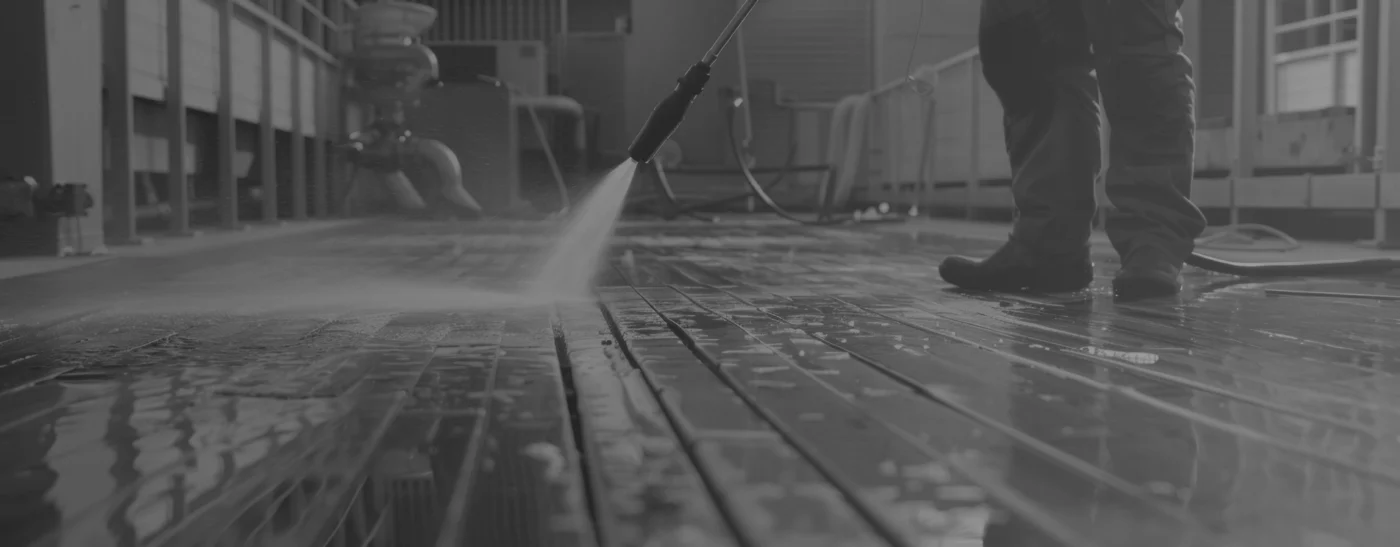
Why Dirty Pavements and Paths Can Become a Safety Problem
Pavements and paths around commercial properties are exposed to constant foot traffic, rainfall, dirt, leaves, organic material, and general environmental contamination. Over time, these deposits can build up on the surface and create more than an appearance problem.
For businesses, offices, apartment developments, retail properties, and other commercial sites, poorly maintained pedestrian areas can become more difficult to keep clean and can contribute to conditions where slips and trips are more likely. Regular inspection and appropriate cleaning can therefore form an important part of general exterior property maintenance.
Dirty Surfaces Can Affect Pedestrian Safety
The Health and Safety Authority identifies wet surfaces, walkways, uneven surfaces, entrances and exits, and outside areas among the factors associated with slips, trips and falls in Irish workplaces. The HSA also states that people generally slip on contaminated surfaces or footwear rather than clean, dry surfaces.
The Health and Safety Authority’s guidance on slippery surfaces explains that hard pedestrian surfaces can become slippery when contaminated and recommends assessing areas where people may encounter wet or contaminated surfaces.
This is particularly relevant to outdoor paths and pavements because they are naturally exposed to rain, leaves, soil, algae, moss, and other materials that can accumulate over time.
Rain Can Make Existing Contamination More Important
A dirty pavement may not appear particularly problematic when it is dry. However, rainfall can change the condition of the surface by introducing moisture to dirt, organic deposits, algae, moss, and other contaminants.
Dublin experiences regular rainfall throughout the year. According to Met Éireann’s 1991–2020 climate averages for Dublin Airport, the area receives an average of 772.5 mm of rainfall annually and records more than 180 days per year with at least 0.2 mm of rainfall.
This means that outdoor pedestrian surfaces are frequently exposed to conditions where existing deposits can become wet. Areas that already have a build-up of organic material may therefore require particular attention during wetter periods.
Moss and Algae Can Create Slippery Conditions
Moss and algae are common forms of organic growth on outdoor surfaces, particularly where moisture, shade, and limited drainage are present. They can develop on paving, paths, steps, walls, and other areas around commercial properties.
The HSA specifically identifies algae and fine mosses among the contaminants that can contribute to slip risks on pedestrian surfaces. This makes established organic growth something that property managers should not treat purely as a cosmetic issue.
Green or dark growth is particularly worth monitoring on frequently used paths, entrances, ramps, steps, and other areas where people regularly walk. If the surface becomes slippery when wet, the potential risk can increase further.
Leaves and Organic Debris Can Accumulate on Paths
Trees and planted areas can add another source of contamination. Leaves, small branches, soil, pollen, and other organic material can collect on pavements and paths, particularly during autumn and periods of windy or wet weather.
Individual leaves may not seem significant, but repeated accumulation can create a layer of organic material across sections of a pedestrian route. When combined with rain, this can make the surface more difficult to keep clean and may affect underfoot conditions.
Areas underneath trees and beside landscaped sections should therefore be included in routine inspections, particularly where debris repeatedly collects in the same locations.
Entrances Deserve Particular Attention
Building entrances are among the most important areas to monitor because large numbers of people may pass through them every day. Outdoor contamination can also be carried inside on footwear, making the condition of the external approach relevant to the entrance area as a whole.
The HSA’s guidance on entrances and slip prevention recommends considering the areas inside and outside entrances and highlights wet surfaces, steps, flooring, and weather conditions as factors that need to be managed.
For commercial properties, entrances should therefore be inspected regularly, particularly during wet weather and after periods of heavy rainfall.
Uneven and Damaged Areas Are a Separate Problem
Not every pavement safety issue is caused by dirt. Cracked paving, damaged surfaces, raised edges, potholes, loose materials, and changes in level can also create trip hazards.
The HSA’s housekeeping guidance identifies stones, rubble, uneven or rough surfaces, potholes, cables, pallets, and other obstructions among factors that can contribute to trips and falls on walkways.
Cleaning cannot correct a structural defect or damaged paving, so property managers should distinguish between contamination that can be removed through cleaning and physical defects that require repair.
Dirty Paths Can Become More Difficult to Maintain Over Time
Small amounts of dirt and organic material are generally easier to deal with than heavily established build-up. When contamination is allowed to remain on a surface for long periods, additional material can collect around it and the area can become progressively more difficult to maintain.
This can be particularly noticeable on textured paving, joints, edges, shaded paths, and areas where water regularly collects. Once moss, algae, soil, and other deposits become established, simply sweeping the surface may no longer be sufficient.
Regular inspection and timely cleaning can therefore help prevent outdoor pedestrian areas from reaching a condition where much more intensive maintenance is required.
Cleaning Is Part of a Wider Safety Approach
Cleaning should not be viewed as a replacement for a proper risk assessment. Commercial property managers should also consider surface condition, drainage, lighting, pedestrian traffic, steps, ramps, entrances, damaged areas, and other factors that may affect safety.
The HSA states that Irish workplaces must be kept clean and that floors, outdoor workstations, and other relevant surfaces should not be slippery. Its guidance also recommends identifying potential hazards and using appropriate controls rather than relying on warning signs alone.
Keeping pedestrian routes clear and removing accumulated contamination is therefore one part of a broader approach to maintaining safer access around a commercial property.
High-Traffic Paths Should Be Checked More Often
Not every outdoor path on a property experiences the same level of use. A main entrance, route between a car park and reception, or pedestrian route around a busy commercial building can receive considerably more traffic than a secondary path.
High-traffic areas should therefore be inspected more frequently, particularly after heavy rain, storms, leaf fall, or other conditions that can introduce additional contamination.
Property managers can also pay attention to areas where staff or visitors have reported slippery conditions, near-slips, or other concerns. Repeated reports from people using a particular route can be a useful indication that the area needs further assessment.
Professional Cleaning Can Help With Established Build-Up
Where pavements and paths have developed significant dirt, algae, moss, staining, or other deposits, professional exterior cleaning can help restore the surface to a cleaner condition. This can be particularly useful for large commercial areas where manual cleaning would be impractical.
The appropriate cleaning method depends on the material, condition, level of contamination, and surrounding environment. Excessive pressure or an unsuitable cleaning method can potentially damage some surfaces, so the approach should be selected according to the surface being treated.
Pinnacle Portfolio provides power washing services for commercial properties and outdoor surfaces in Dublin, with the cleaning approach considered according to the requirements of the area.
Keeping Pedestrian Routes Clear Between Cleanings
Professional cleaning is only one part of keeping paths in good condition. Regular sweeping, removal of leaves and debris, monitoring of drainage, and prompt attention to spills or contamination can help prevent surfaces from becoming heavily affected between deeper cleaning visits.
The HSA recommends keeping floors and access routes clear and removing accumulations as frequently as necessary. For outdoor areas, this means that routine housekeeping can be just as important as periodic professional cleaning.
A practical maintenance routine can therefore combine day-to-day housekeeping with periodic inspection and professional cleaning when the condition of the surface requires it.
Final Thoughts
Dirty pavements and paths are not simply an appearance issue. Wet surfaces, algae, moss, leaves, organic material, uneven areas, and other contamination can contribute to conditions where slips and trips are more likely, particularly on heavily used pedestrian routes.
Regular inspection is therefore important for commercial properties. Property managers should pay particular attention to entrances, high-traffic paths, shaded areas, surfaces affected by moss or algae, and locations where water or debris repeatedly accumulates.
For commercial properties and outdoor pedestrian areas in Dublin, Pinnacle Portfolio can assess the condition of exterior surfaces and provide an appropriate cleaning approach. To find out more about Pinnacle Portfolio power washing services, visit the service page.
For more information about Pinnacle Portfolio and its property maintenance and cleaning services, visit the Pinnacle Portfolio home page.